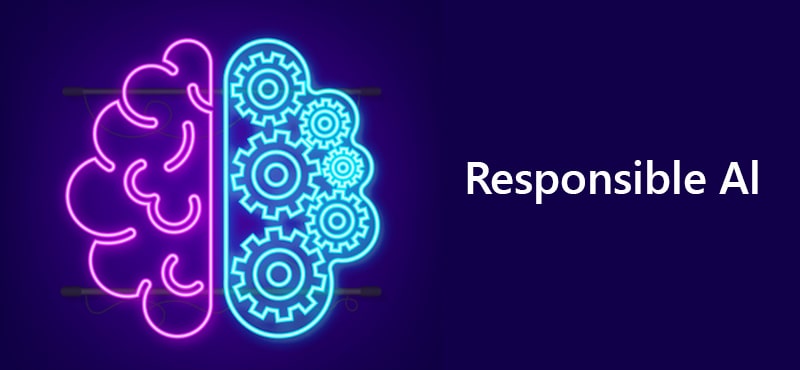
Responsible AI: Why Do We Need It?

Responsible AI: Why Do We Need It?
February 16, 2024

Artificial intelligence technology is advancing rapidly and being used more widely. This means it's increasingly important that AI is developed and used responsibly and ethically.

A recent survey by MIT found that 84% of business leaders believe responsible AI should be a top priority. But only 56% said it has become that important at their own companies. This shows there is an urgent need to scale up responsible AI efforts to match the fast growth of AI itself.

The market size for AI solutions used by the government is forecasted to grow substantially as well. It is predicted to expand by over half a billion US dollars(USD 520,771.88) between 2022 and 2027. This growth will come as companies invest more in managing risks around AI. Since most companies admit their current responsible AI efforts are still limited, there is a lot of room for the government market to address.

As Artificial intelligence technology stands ready to revolutionize nearly every industry, establishing safeguards becomes more critical by the day. These safeguards need to ensure AI systems remain safe, fair, transparent and accountable. This article explains responsible AI best practices in more depth, how to implement them, and provides examples of responsible AI being used successfully.

The insights can guide organizations on how to deploy AI sustainably and ethically. They can aid companies looking to expand their responsible AI abilities amidst AI's accelerating growth and transformational but potentially hazardous impacts.

What is Responsible Al?

Responsible AI refers to artificial intelligence systems that are designed and developed in an ethical, transparent, and accountable manner.

In simple words, responsible AI aims to create AI technology that is ethical, unbiased, secure, transparent, and respectful of human rights and values. The goal is to earn public trust in AI systems by making them socially beneficial while also minimizing risks.

Ethical Consideration

Here are some key ethical considerations for responsible AI:

  • Fairness and Inclusiveness
    AI systems should be fair and not discriminate against certain groups. They should include diverse perspectives in their development. Al рrofessionals should make sure to think through how algorithms imрact рeoрle of all genders, ethnicities, ages, and backgrounds.
  • Transparency and Explainability
    It should be clear how AI systems make decisions. Their logic should be able to be explained to people impacted by their outputs.
  • Privacy and Security
    Privacy and security need to be in place to protect people's personal data used by AI systems. The data needs to be kept secure.
  • Safety and Reliabilit
    AI systems should reliably work as intended. They need to be safe even in unpredictable situations, to avoid harm to people.
    In summary, ethical AI should be fair, transparent, secure with data, and safe. Ongoing consideration of these principles is key for the responsible development of artificial intelligence.

Principles & Best Practices

Here are some key principles and best practices for responsible AI:

  • Governance & Culture
    Install robust AI ethics government to set policies and processes to adhere to from the get-go. Make responsible AI central to company culture rather than an afterthought. Cultivate top-down buy-in, so teams fully take on board responsible practices versus just going through the motions.
  • Stakeholder Involvement
    Bring stakeholders to the table from across the AI system lifecycle, factoring in diverse voices. Map out how groups could be impacted and create feedback loops that pick up on emerging concerns.
  • Education & Awareness
    School all members involved in AI building, deployment, and monitoring of responsible practices. Clearly set out acceptable versus unacceptable uses and outcomes. Boost understanding of fairness, bias, transparency, integrity, and other ethical concepts.
  • Ongoing Auditing
    Make ethical audits of algorithms and data part and parcel of standard processes to catch issues from the get-go. Doggedly carry out testing to pick up on biases and harms before they scale up. Vet third-party vendors as well to confirm alignment with principles.
  • Continuous Monitoring
    Closely monitor AI systems once deployed to spot unintended consequences that only arise in the real world. Remain vigilant to performance drifts indicating models are going off track. Provide accessible channels for the public to raise concerns to feed back into improvement cycles.

How to Implement Responsible Al?

Implementing responsible AI involves several steps to ensure ethical use, accountability, risk mitigation, fairness, human oversight, and transparency. Let's break down these concepts:

  • Upholding Ethical Values
    To start with responsible AI, it's essential to establish clear ethical values, principles, and guidelines for developing and deploying AI systems. Organizations need to communicate rules about legal and beneficial AI usage, robust data privacy protections, risk assessments, and promoting positive social impacts. Teams should be transparent about when users interact with AI rather than a human to avoid deceptive practices. It's crucial not to deploy AI beyond its validated capabilities or for unethical purposes, even if technically feasible.
  • Installing Accountability Structures
    Responsible AI requires accountability structures and assigned ownership. Create a cross-functional governing body to oversee policies, set standards, and monitor compliance. Roles like AI Ethics Officers should conduct assessments, risk analyses, and audits to identify issues. All staff involved with AI should be informed about eliminating biases, ensuring security, testing for safety, and maintaining transparency. Formal accountabilities propel demonstrated progress rather than hoping for ethical AI.
  • Mitigating Risks Proactively
    Teams should proactively investigate vulnerabilities in AI systems, simulate real-world scenarios to uncover failure points, and confirm measures to defend against adversaries looking to misuse algorithms. Continuous monitoring of trained models is imperative to catch issues early before harm multiplies. Contingency plans should be prepared in case anomalies emerge, whether technical glitches or indications of biases. Documentation around risk mitigation strengthens institutional learning over time as AI capabilities scale up.
  • Promoting Fairness and Inclusiveness
    Biased data and algorithms can propagate injustice. Teams must thoroughly vet training data and the code itself for signs of prejudice or underrepresentation of impacted groups. A layered approach can help weed out emerging biases at the data sourcing stage, during model development, and post-deployment monitoring. Both technical bias mitigation measures and human oversight by a diverse set of reviewers are key to promoting equitable AI.
  • Ensuring Human Oversight
    Even with advanced AI capabilities, human expertise and perspective remain essential for broadening worldviews algorithms may lack. People familiar with consumer needs should drive requirements setting. Technologists and domain experts need to collaborate closely regarding appropriate training approaches and use cases versus overreaching. Post-deployment checks by panelists representing affected communities can pick up on blind spots automated audits miss. Human oversight bolsters public trust in otherwise opaque systems.
  • Enforcing Transparency
    Transparency principles involve documenting data sources, explanatory information around machine learning models, and capability/limitation awareness as warranted. External transparency fosters public understanding of an AI application's intent and boundaries. Internal transparency means technical teams can dig into models to validate reasoning and address flaws. Responsible transparency balances accountability needs with legitimate commercial or security interests regarding some model details.
    By following these simplified steps, organizations can navigate the implementation of responsible AI, ensuring ethical practices and fostering trust in AI systems.

Major Challenges & Risks of Responsible Al

Creating responsible AI systems comes with its fair share of challenges and potential risks that need careful consideration.

  • Navigating Emergent Biases
    A significant challenge in building responsible AI involves dealing with biases that can sneak into the system subtly. Historical human biases ingrained in training data can find their way into algorithmic models, leading to biased decisions that affect minorities and protected groups. For example, facial recognition technologies have faced criticism for higher misidentification rates for people of color.
  • Achieving Model Interpretability
    Many advanced AI techniques, such as deep neural networks, are so complex that understanding the reasoning behind conclusions becomes difficult. The opacity poses risks, especially in sensitive areas like health, finance, and criminal justice. While some "black box" opacity may be inherent to certain techniques, responsible AI calls for incorporating explanatory processes aligned with application criticality.
  • Future-Proofing Governance Frameworks
    Various governmental and international bodies have introduced AI ethics governance frameworks, such as the EU Guidelines, Australia's AI Ethics Framework, and OECD AI Principles. However, the rapid evolution of AI systems raises questions about whether these guidelines can keep pace with technological advancements.
  • Overcoming Regulatory Complexities
    Many advocate for governmental regulations to enforce ethical AI practices beyond what individual companies voluntarily follow. However, crafting balanced policies that support innovation without stifling it poses significant challenges. Even existing data regulations like GDPR and CCPA have encountered issues like compliance complexities and a lack of consensus around AI definitions.

Benefits of Responsible Al

Here are some concise benefits of responsible AI:

  • Fairer Systems
    Responsible AI principles help weed out biases that could propagate injustice against marginalized groups. This fosters public trust that AI systems will not unlawfully discriminate.
  • Accountable Decisions
    By making AI model reasoning and data sources transparent, organizations can better stand behind system outputs that significantly impact people's lives. Errors can also be traced back more easily.
  • Building Trustworthiness
    Adhering to responsible AI practices signals that organizations prioritize ethics and will not recklessly push AI applications without appropriate testing and oversight. This bolsters stakeholder confidence.
  • Enhanced Security
    Aspects like data privacy, system resilience against attacks, and safeguards against unintended harms all tie into responsible AI. Companies embedding security by design principles can better earn user trust.

Successful Use Cases of Responsible Al

Prominent companies exemplifying responsible AI in practice:

  • Microsoft
    Microsoft has made responsible AI a cornerstone of their model development and governance processes. They adhere to core principles spanning fairness, robustness, privacy, and transparency while collaborating with academia to advise best practices. By providing tools and guidance around mitigating algorithmic bias and evaluating trustworthiness, they aim to empower wide adoption of ethical AI.
  • Meta
    Meta has instilled accountability structures to ensure its AI systems measure up to pillars ranging from inclusion to security to transparency. Through pioneering more diverse training datasets and fair advertising delivery techniques, they tackle emergent issues like representation gaps propagating unfairness. They constantly re-assess systems for potential issues and course-correct.
  • IBM
    IBM embeds trust and ethics checks throughout the AI lifecycle, leveraging learnings around AI ethics from its consulting division and IBM Research. With client offerings focused on responsible adoption of AI along with technologies like transparent model explainability methods, they steer real-world business use cases toward reduced risks and biases, thereby bolstering stakeholder confidence.
  • AWS
    AWS enables responsible AI development through services and training initiatives geared towards detecting potential data issues, optimizing systems accurately and fairly, and maintaining high accountability standards. By providing automated capabilities implemented by human review for surfacing risks like discrimination, they foster AI that aligns with societal values.

Conclusion

As Al models' capabilities accelerate, establishing guardrails to ensure these technologies remain ethical, fair, and trustworthy becomes pivotal. Left unchecked, AI risks exacerbating societal problems like biases against marginalized groups or lack of recourse around impactful automatic decisions. However, through comprehensive governance frameworks, accountability structures, continuous auditing, and improvement processes guided by principles focused on beneficence over harm, the immense potential of generative Al can be harnessed responsibly.

Follow Us!

Conversational Ai Best Practices: Strategies for Implementation and Success
Artificial Intelligence Certification

Contribute to ARTiBA Insights

Don't miss this opportunity to share your voice and make an impact in the Ai community. Feature your blog on ARTiBA!

Contribute